

A busy fight gym needs to make smart use of every part of the training floor. Heavy bags are essential for boxing, Muay Thai, kickboxing, and MMA, but they can also consume a surprising amount of space when they are permanently installed in fixed positions.
For gym owners dealing with growing class sizes, the challenge is not simply fitting more bags into the room. Athletes need enough clearance to move, coaches need space to circulate, and the same floor may also be used for pad work, conditioning, sparring, or group drills. Careful planning can help turn a crowded bag area into a more flexible and efficient training zone.
Start With the Real Training Footprint
A punching bag does not only occupy the space directly beneath it. Athletes also need room around the bag to step, pivot, circle, kick, and work combinations without colliding with nearby users.
This becomes especially important in Muay Thai and MMA training, where kicks and wider movements require more clearance than basic stationary punching drills.
Before adding more bags, owners should observe how athletes actually move during peak classes. This can reveal areas where bags are too close together or where unused floor space could be organized more effectively.
Use Flexible Bag Positioning
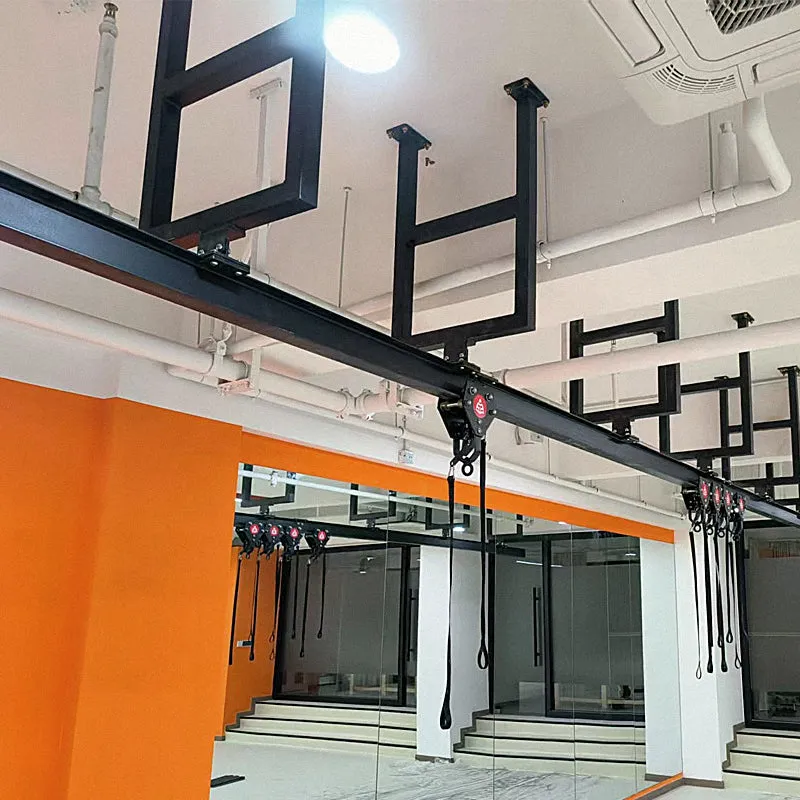
One way to improve space management is by using a sliding punching bag rail system. A rail system allows bags to be repositioned along a track rather than remaining in one fixed location all day.
This can help a gym open up floor space when bags are not required. For example, bags may be spread out during striking sessions and moved closer together when the same area is needed for warm-ups, partner drills, or conditioning work.
The main advantage is flexibility. Instead of designing the entire room around permanent bag positions, coaches can adjust the training area according to the class.
Keep Enough Distance Between Bags
Adding more bags does not automatically increase training capacity if athletes cannot use them comfortably. Bags placed too close together may swing into neighboring stations or limit footwork.
Spacing should reflect the type of training being offered. Boxing sessions may need room for lateral movement and combination work, while Muay Thai classes may require additional space for kicks, knees, and longer bag movement.
Owners should also consider different bag shapes. Long bags, uppercut bags, and angle bags may each require slightly different clearance.
Organize Classes Around Stations
A busy gym can make better use of its equipment by organizing classes into stations. Instead of placing every athlete on a heavy bag at the same time, one group can work on bags while others use pads, shadowbox, or complete conditioning exercises.
Groups can then rotate throughout the session. This reduces the number of bags required for a large class without reducing training variety.
Station-based training also prevents one section of the gym from becoming overcrowded while other areas remain unused.
Plan Equipment Purchases Around Class Size
When expanding a striking area, owners should calculate how many bags, pads, gloves, and other tools are needed for normal peak attendance rather than purchasing equipment without a clear plan.
For larger orders, boxing equipment wholesale options may be useful when outfitting new bag stations or upgrading several pieces of equipment at the same time.
A complete inventory can also help identify whether the gym truly needs more bags or whether better organization of the existing equipment would solve the problem.
Keep Walkways Clear
One common mistake is allowing bags to take over circulation areas. Athletes should be able to move from the entrance to mats, changing areas, storage, and other training zones without walking through active bag stations.
Coaches also need room to move between athletes during classes. Narrow pathways make it harder to correct technique or respond quickly when assistance is needed.
Clear walkways can make even a relatively small gym feel more organized and easier to manage.
Use Walls and Storage Efficiently
Floor space should not be wasted on equipment that could be stored vertically. Gloves, focus mitts, kick shields, skipping ropes, and other accessories can be placed on wall racks or organized shelving.
Keeping small equipment away from bag stations prevents clutter and gives athletes more room to move.
Storage should also be positioned close enough for coaches to access it easily without creating obstacles during active sessions.
Review the Layout as Membership Grows
A bag area that works well for fifteen members may become difficult to manage when the gym regularly hosts thirty. Owners should review the layout periodically rather than waiting until overcrowding becomes a serious issue.
Class schedules, station rotations, bag spacing, and flexible mounting systems can all be adjusted as attendance changes.
Small layout improvements may sometimes provide more usable training capacity than adding another permanent piece of equipment.
Conclusion
Maximizing bag training space is about more than fitting as many punching bags as possible into a room. The most effective setup gives athletes enough room to move while allowing coaches to adapt the floor for different classes and training styles.
Flexible bag positioning, sensible spacing, station-based sessions, organized storage, and clear walkways can all improve how a busy fight gym operates. By reviewing the layout regularly and matching equipment decisions to actual class sizes, owners can create a striking area that remains practical as membership and training demands continue to grow.
